Not every laser is the same — and this is exactly where many providers lose control over the final result.
What often looks like “simple laser cleaning” in YouTube or Instagram videos is actually a highly sensitive technical process. The most important difference is almost never explained: pulsed laser vs. CW laser. And that difference changes everything.
Without clear technical transparency, customers often have no idea which type of laser is actually being used. As a result, the wrong systems are used for the wrong applications — with direct consequences for the material itself:
In laser cleaning, there is no room for the wrong choice.
We deliberately do not use CW lasers.
No risk from constant heat input.
No uncontrolled energy transfer.
No compromises when it comes to protecting your material.
Instead, we work exclusively with high-end pulsed laser technology that:
Laser cleaning is only as good as the technology behind it. And this is exactly where ordinary work separates itself from true industrial quality.
Rayworks stands for one clear decision:
Maximum safety. Maximum precision. No experiments with your material.
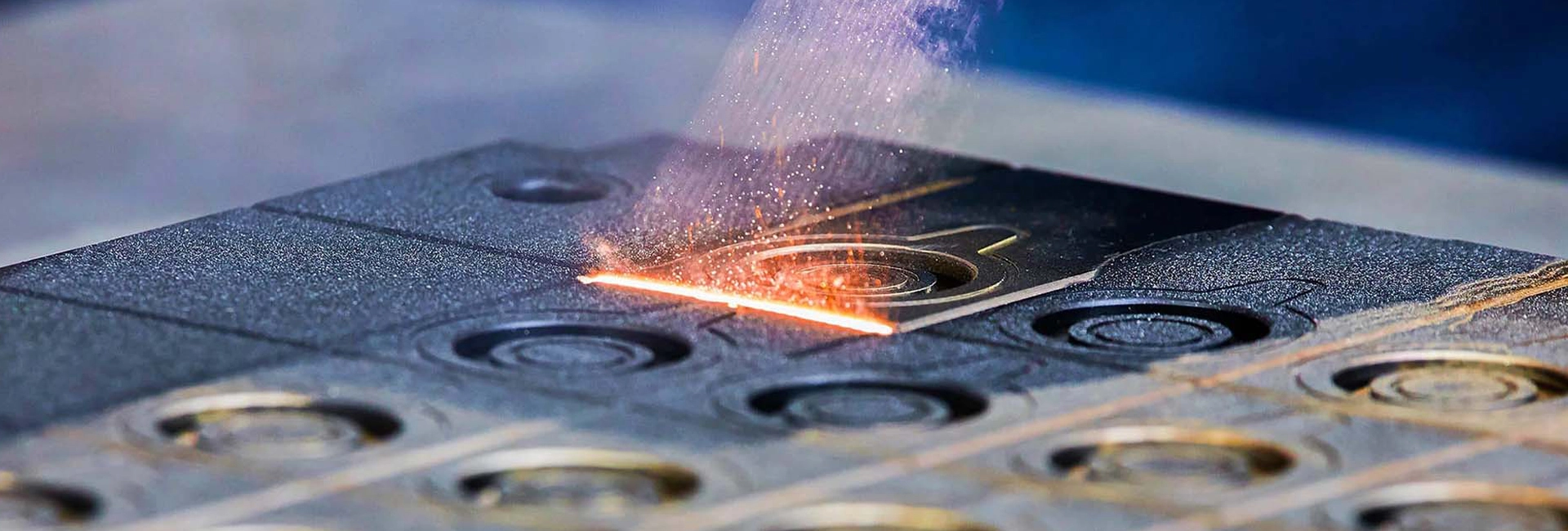
A pulsed laser delivers its energy in short, concentrated pulses lasting only nanoseconds. During this tiny fraction of a second, extremely high peak power is generated, instantly vaporizing contamination. Between pulses, the surface cools completely.
The result:
Maximum cleaning power without heat stress on the base material.
The surface is not damaged, warped, or overheated — even on delicate materials.
A CW laser works with a continuous, uninterrupted beam. While this may sound powerful, in practice it creates constant heat buildup in the surface.
This significantly increases the risk of:
Especially on thin or sensitive surfaces.
CW lasers are harder to control and far less suitable for precision cleaning.
Within the pulsed laser category, power makes a major difference.
Many providers use 300W or 500W pulsed lasers. While these are still pulsed systems, they come with clear practical disadvantages.
Lower power means longer cleaning times:
Our 1000W pulsed laser combines the best of both worlds:
The precision and material safety of pulsed technology with the power required for fast and efficient cleaning.
In short:
Lower wattage does not mean better protection — it only means slower performance. Our 1000W pulsed laser cleans faster, more precisely, and more efficiently.
One of the biggest advantages of our equipment is mobility.
Many industrial laser systems require a heavy-duty 380V three-phase power connection. Our 1000W pulsed laser operates on standard 230V single-phase power.
Our laser works from a normal 230V outlet — anywhere electricity or a generator is available.
The equipment fits inside a service van and can be rapidly deployed anywhere — from historic city-center buildings to industrial facilities or remote locations.
No complicated installation.
No heavy infrastructure.
No long setup times.
We start working immediately on-site.
Thanks to the mobility and simple power requirements, we can operate throughout the Netherlands, Belgium, and Luxembourg without limitations.
More power means faster operation — but only when combined with the correct technology.
A 1000W pulsed laser is both powerful and surface-safe.
A 1000W CW laser would simply be too aggressive.
Not when used correctly.
The settings are always precisely adjusted to the material and contamination level. We also perform test treatments before full-scale cleaning begins.
CW lasers are generally cheaper to purchase.
We consciously invest in pulsed technology because safety and result quality always come first.
Yes.
We can operate using mobile 230V generators, allowing us to work completely independently of location.
We invest in the best technology so you receive the best possible result: Fast. Precise. Chemical-free. Deployable anywhere.
Contact us today for a free consultation or customized quotation.